
Your social feed knows what you clicked. Your dermatologist knows your skin. There’s a difference.
September is Skin Care Awareness Month, and we’re going to celebrate it a little differently at WellAve Dermatology.
We could tell you to wear sunscreen, check your moles, moisturize and schedule your annual skin exam.
All good advice.
But this year, we want to talk about something that may be just as important:
Be careful where you get your skin care advice.
We live in a world where a 30-second video can reach millions of people before a dermatologist has a chance to say, “Wait…that’s not actually true.”
Skin care misinformation is everywhere. Some of it is harmless. Some of it is expensive. And some of it could potentially keep you from recognizing or preventing a serious medical condition.
So, in honor of Skin Care Awareness Month, let’s tackle four ideas worth thinking twice about.
1. “SUNSCREEN IS BAD FOR YOU.”
Yes, this conversation is actually happening.
Spend enough time online and you may encounter posts suggesting that sunscreen ingredients are more dangerous than sun exposure—or that avoiding sunscreen is somehow healthier or more “natural.”
Please don’t let social media convince you that protecting yourself from ultraviolet radiation is the dangerous choice.
UV radiation from the sun is a well-established cause of skin cancer and premature skin aging. Regular sun protection remains one of the most important things you can do for your skin.
If you’re concerned about a particular sunscreen ingredient, talk with a dermatology provider. There are many sunscreen formulations available, including mineral sunscreens containing zinc oxide and titanium dioxide.
But abandoning sun protection because of something you watched online?
That’s not Skin Care Awareness. That’s misinformation winning.
2. “I DON’T NEED A SKIN CHECK. I WOULD KNOW IF SOMETHING WAS WRONG.”
Would you?
Skin cancer doesn’t always announce itself with pain, bleeding or a dramatic-looking growth.
Sometimes it looks like a small spot that won’t heal.
Sometimes it’s a mole that has slowly changed.
Sometimes it’s a pink or scaly patch that seems relatively harmless.
And sometimes the suspicious spot is somewhere you rarely look—your scalp, back, behind an ear or another difficult-to-see area.
That’s one reason professional skin examinations can be so valuable.
You don’t need to become afraid of every freckle on your body. You do need to pay attention to your skin and recognize when something is new, changing, unusual or simply doesn’t seem right.
If you’re thinking:
“It’s probably nothing.”
Maybe it is.
But wouldn’t you rather know?
3. “IF IT’S EXPENSIVE, TRENDING OR HAS 10,000 FIVE-STAR REVIEWS, IT MUST BE GOOD FOR MY SKIN.”
Welcome to modern skin care.
Serums. Acids. Peptides. Masks. Retinoids. Toners. Exfoliants. LED devices. “Miracle” creams. Ten-step routines.
There are some outstanding skin care products available today.
There is also outstanding marketing.
Those are not the same thing.
A $150 product isn’t automatically better than a $20 product. “Natural” doesn’t automatically mean safer. Trending doesn’t mean medically appropriate. And the skin care routine that transformed an influencer’s complexion may irritate yours.
In fact, sometimes doing more to your skin isn’t better.
Over-exfoliating, combining too many active ingredients or constantly changing products can leave skin irritated and your protective skin barrier compromised.
Skin care should be based on your skin, your concerns and your goals—not somebody else’s algorithm.
Before spending another few hundred dollars trying to solve a persistent skin problem, consider spending some time with someone who actually diagnoses and treats skin for a living.
4. “IT’S JUST A SKIN PROBLEM.”
This may be the biggest misconception of all.
Your skin is your body’s largest organ, and changes in your skin can sometimes provide clues about what’s happening elsewhere in your body.
Persistent rashes, unusual itching, changes in nails, hair loss, discoloration and other symptoms can have many possible causes. Some are simple. Others deserve further evaluation.
And then there is the emotional side of skin disease.
Acne, psoriasis, eczema, hair loss and other visible conditions can affect confidence and quality of life far beyond the physical symptoms.
So no—we don’t believe there is always such a thing as “just a skin problem.”
If something is bothering you, changing or affecting how you feel, it deserves attention.
THE MOST IMPORTANT SKIN CARE PRODUCT YOU OWN ISN’T IN YOUR BATHROOM.
It’s awareness.
Know your skin.
Notice changes.
Question questionable advice.
Protect yourself from the sun.
And don’t allow TikTok, Instagram, Google—or even an AI chatbot—to become a substitute for appropriate medical care when something doesn’t look or feel right.
That may be the most important message of Skin Care Awareness Month.
At WellAve Dermatology, our providers are here to help with everything from routine skin examinations and common skin conditions to suspicious lesions, skin cancer treatment, surgical dermatology and cosmetic concerns.
You don’t need to diagnose yourself before making an appointment.
That’s our job.
Something on your skin making you wonder?
Don’t scroll past it.
Don’t keep Googling it.
Don’t wait six months hoping it disappears.
Let us take a look.
BOOK AN APPOINTMENT WITH WELLAVE DERMATOLOGY TODAY.
Your skin may be trying to tell you something.
Be aware enough to listen.
Related Posts
Tan Today. Pay Tomorrow? The Hidden Truth About Tanning Beds
There are some health risks that everyone immediately recognizes. Smoking. Not wearing a seatbelt. Ignoring chest pain. Yet one health risk continues to hide in plain sight every day: tanning
Read more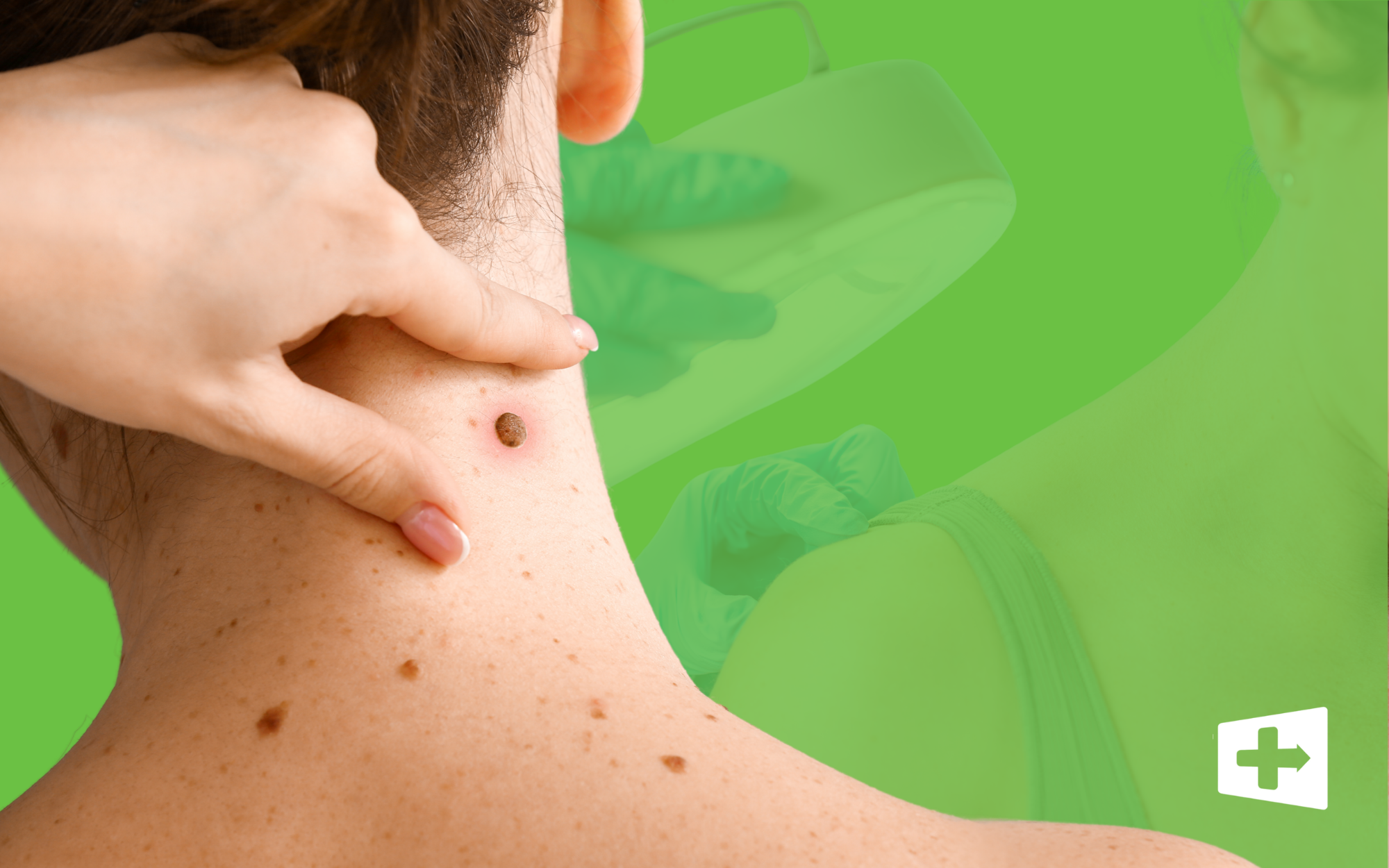
5 Skin Changes You Should Never Ignore
Sometimes Your Skin Is Trying to Tell You Something Important. Our skin changes throughout our lives. Freckles appear, new moles develop, age spots become more noticeable, and bumps seem to
Read more
5 Dermatology Truths That Might Shock You
The Internet Gets These Wrong All the Time By Erin Delaney Brimhall MSN, CRNP Let’s be honest. The internet is a wonderful place for cat videos, vacation photos, and finding
Read more